EPC Services for Solar Energy: What Businesses Need to Know Before Investing
Last updated: 18 Mar 2026
1090 Views
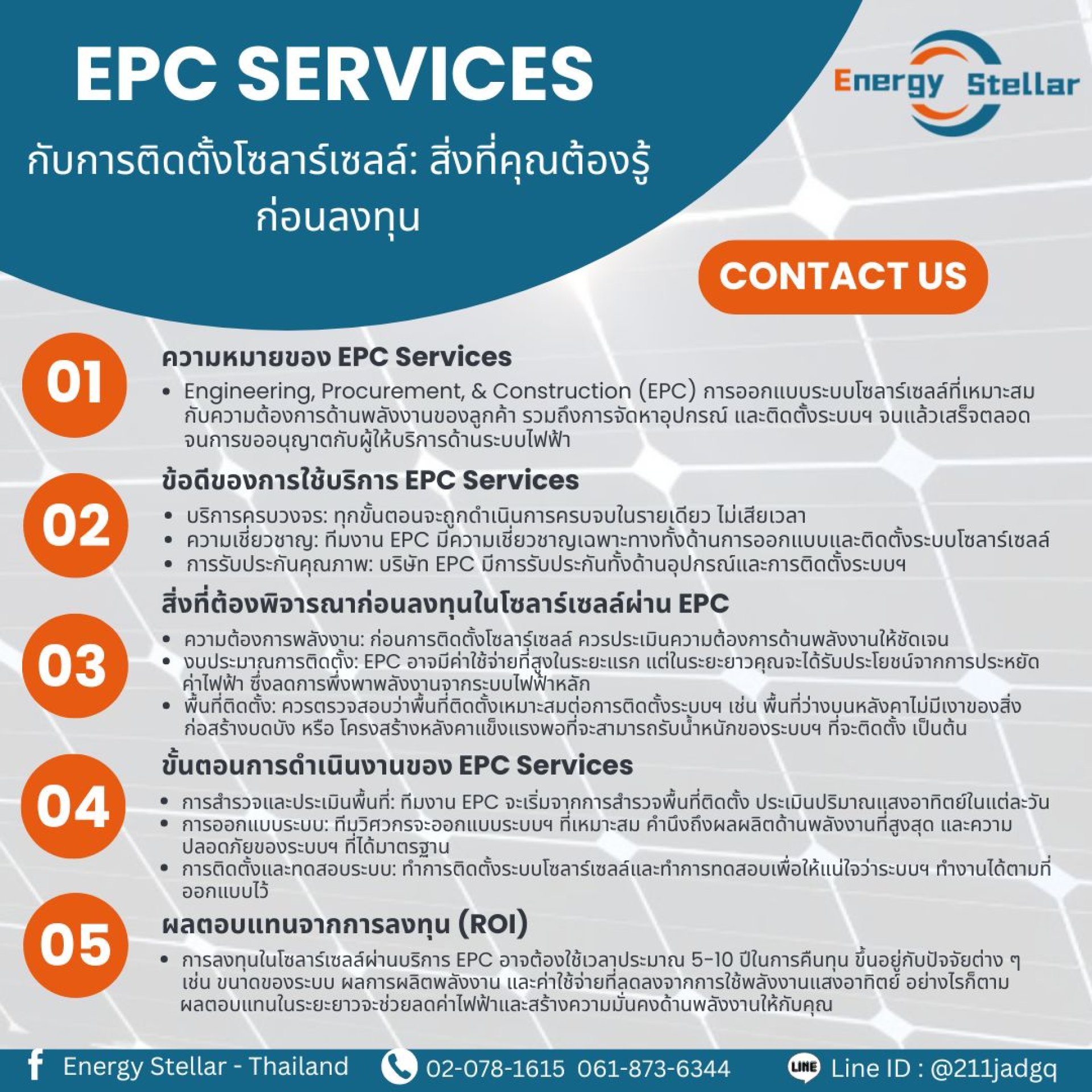
As energy costs continue to rise, many businesses are turning to solar energy as a long-term cost-saving solution. Installing a solar power system is not just an expense—it is a strategic investment. However, the success of a solar project largely depends on selecting the right service provider, particularly those offering EPC Services, which manage the entire process from start to finish.
What Are EPC Services?
EPC stands for Engineering, Procurement, and Construction—a comprehensive, end-to-end service model for solar installation projects.
Engineering
System design based on energy consumption analysis and site conditions to ensure maximum efficiency
Procurement
Sourcing high-quality components such as solar panels, inverters, and mounting structures
Construction
Installation, system testing, and integration with the existing electrical system
Key Benefits of EPC Services
End-to-End Project Management
Single point of contact, reducing complexity and coordination issues
Time and Risk Efficiency
Managed by experienced professionals across all stages
Customized System Design
Tailored solutions based on actual energy usage and site conditions
Quality Assurance and Warranty
Coverage for both equipment and installation work
Factors to Consider Before Investing
Before proceeding with a solar EPC project, businesses should evaluate:
Energy Consumption
To determine the appropriate system size
Investment Budget
Initial costs versus long-term savings
Installation Space Readiness
Roof area, sunlight exposure, and structural capacity
EPC Project Workflow
The typical EPC process includes three main steps:
Site Survey & Assessment
Evaluate location and solar generation potential
System Design
Develop an optimized and safe system layout
Installation & Commissioning
Install, test, and activate the system for operation
Return on Investment (ROI)
Solar EPC projects typically achieve a payback period of 5–10 years, depending on system size and energy usage patterns.
Long-term benefits include:
Continuous reduction in electricity costs
Protection against rising energy prices
Enhanced corporate image through clean energy adoption
What Are EPC Services?
EPC stands for Engineering, Procurement, and Construction—a comprehensive, end-to-end service model for solar installation projects.
Engineering
System design based on energy consumption analysis and site conditions to ensure maximum efficiency
Procurement
Sourcing high-quality components such as solar panels, inverters, and mounting structures
Construction
Installation, system testing, and integration with the existing electrical system
Key Benefits of EPC Services
End-to-End Project Management
Single point of contact, reducing complexity and coordination issues
Time and Risk Efficiency
Managed by experienced professionals across all stages
Customized System Design
Tailored solutions based on actual energy usage and site conditions
Quality Assurance and Warranty
Coverage for both equipment and installation work
Factors to Consider Before Investing
Before proceeding with a solar EPC project, businesses should evaluate:
Energy Consumption
To determine the appropriate system size
Investment Budget
Initial costs versus long-term savings
Installation Space Readiness
Roof area, sunlight exposure, and structural capacity
EPC Project Workflow
The typical EPC process includes three main steps:
Site Survey & Assessment
Evaluate location and solar generation potential
System Design
Develop an optimized and safe system layout
Installation & Commissioning
Install, test, and activate the system for operation
Return on Investment (ROI)
Solar EPC projects typically achieve a payback period of 5–10 years, depending on system size and energy usage patterns.
Long-term benefits include:
Continuous reduction in electricity costs
Protection against rising energy prices
Enhanced corporate image through clean energy adoption
Related Content
As renewable energy continues to gain importance in our daily lives, solar panels have become one of the most popular solutions for reducing electricity costs and lowering carbon emissions. But did you know that not all solar panels are the same? Today, the two main technologies in the market are P-Type and N-Type solar panels. Each comes with its own structure, efficiency, and lifespan.
21 Aug 2025
ประเทศไทยเป็นประเทศที่มีแดดแรงเกือบตลอดทั้งปี โดยเฉพาะในฤดูร้อนที่อุณหภูมิสูงถึง 40 องศา หลายบ้านต้องเปิดแอร์ทั้งวัน ส่งผลให้ค่าไฟพุ่งสูงขึ้นอย่างน่าตกใจ แต่รู้ไหมว่า "แสงแดด" ที่ทำให้คุณร้อนในตอนนี้ กำลังเป็นโอกาสในการประหยัดเงินได้อย่างยั่งยืน ด้วย โซลาร์เซลล์จากเอเนอจี สเตลลาร์
17 Apr 2025
ในยุคที่โลกกำลังเผชิญกับปัญหาด้านสิ่งแวดล้อม ภาวะโลกร้อน และต้นทุนพลังงานที่พุ่งสูงขึ้นอย่างต่อเนื่อง การใช้พลังงานแบบเดิมที่อาศัยเชื้อเพลิงฟอสซิล เช่น น้ำมัน ถ่านหิน และก๊าซธรรมชาติ เริ่มไม่ตอบโจทย์ทั้งในด้าน ความคุ้มค่า และ ความยั่งยืน อีกต่อไป นี่จึงเป็นเหตุผลที่ทำให้หลายบ้านเรือนและธุรกิจหันมาให้ความสนใจกับ พลังงานทางเลือก โดยเฉพาะ “พลังงานแสงอาทิตย์” ที่สามารถแปลงแสงแดดให้กลายเป็นไฟฟ้าได้ผ่านเทคโนโลยี โซลาร์เซลล์ ที่ทั้ง
14 May 2025
